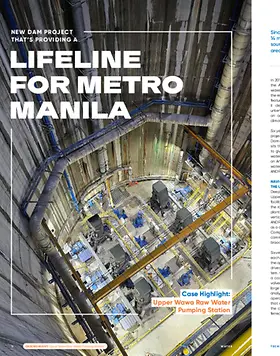
BUILDING A PUMPING STATION 65 METERS UNDERGROUND
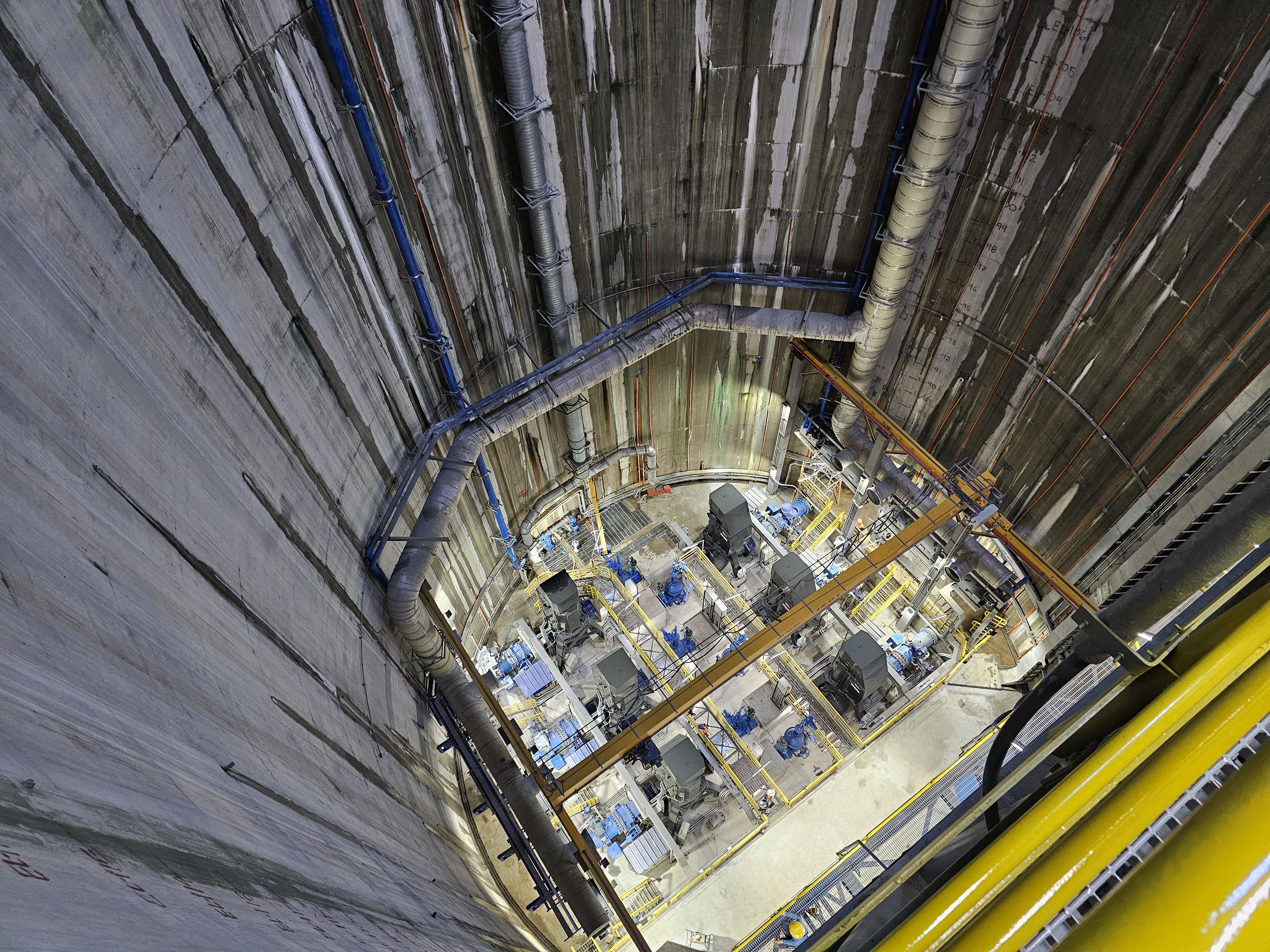
The technical demands of the project were shaped, above all, by geometry and geography. A pumping station built at the base of a 65-meter shaft is not exactly a typical installation. The vertical orientation, the confined space, the loads transferred into the surrounding concrete structure, and the need to guarantee reliable hydraulic performance across a wide operating range all had to be resolved together rather than sequentially.
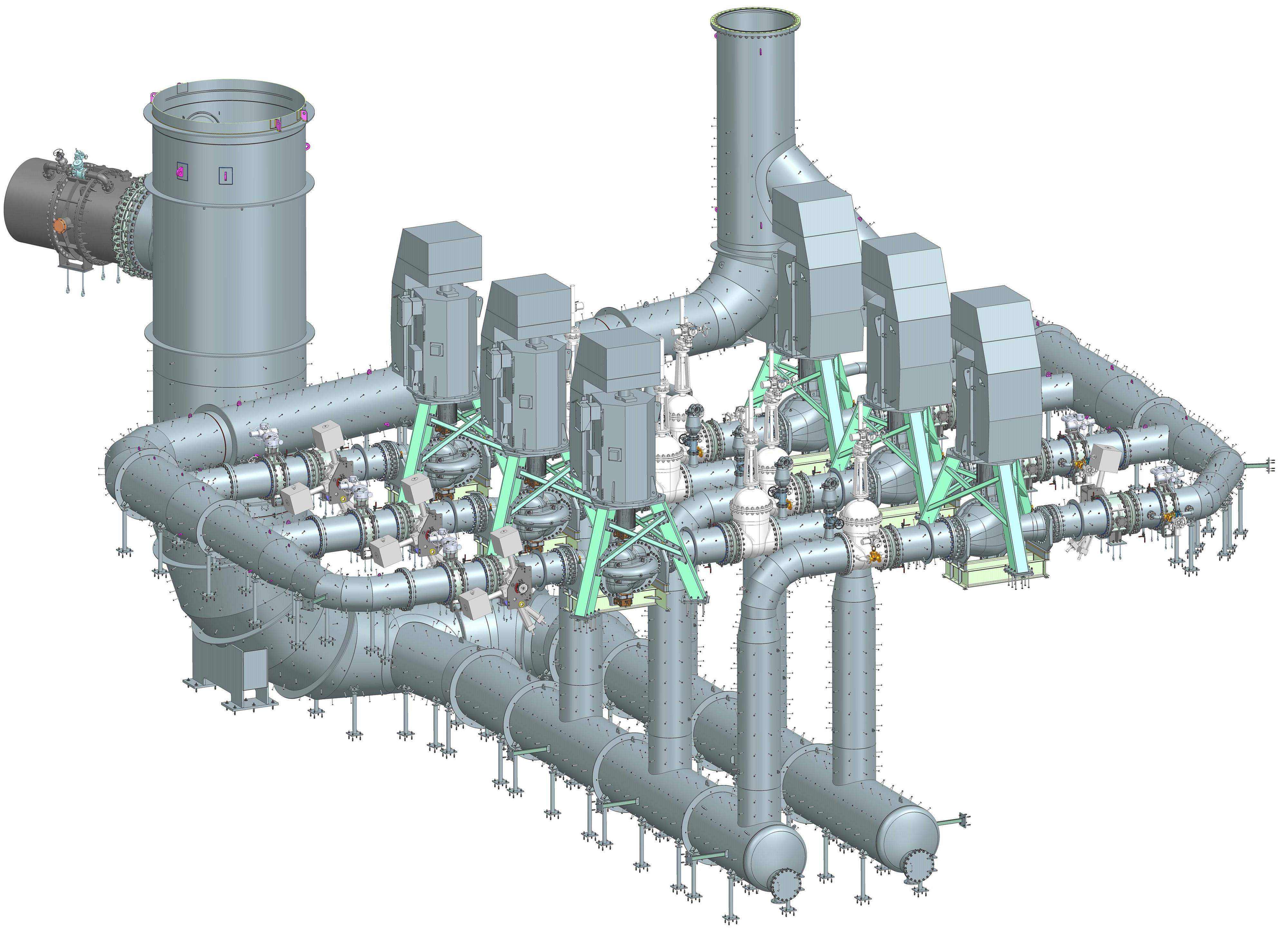
To do this, during the concept phase, several pump configurations were evaluated against efficiency, footprint, reliability and cost. The vertical split-case solution selected was then further refined in detailed design, with a new volute casing, motor support, and revised seal-water piping developed specifically for the project. Each pump was engineered to deliver 1.5 m³/s at heads of up to 84.7 meters, with efficiencies above 88 per cent – a critical figure for an asset that is expected to run around the clock, year after year.
The mechanical design also had to account for operating loads that are specific to vertical installations, and the factory acceptance testing was adapted accordingly with a vertical FAT carried out using the project’s own base frame, motor and torque meter. This was carried out to test performance and vibration behavior in conditions as close to real operation as possible before the pumps were shipped.
Further adding to the project's complexity were 260 tonnes of steel piping, some of it with wall thicknesses up to 30 mm, which had to be designed for transport, installation and long-term reliability, with expansion joints to absorb thermal and mechanical loads. Isolation, drainage and air valves completed the system, protecting it against hydraulic transients and providing controlled behavior under normal operation.
“The technical challenges on Upper Wawa weren’t the kind you can solve on paper alone. The depth of the shaft, the loads on the concrete structure, the way the piping had to be transported and installed – all of it required close collaboration between our mechanical, hydraulic, structural and site teams,” says Michael.