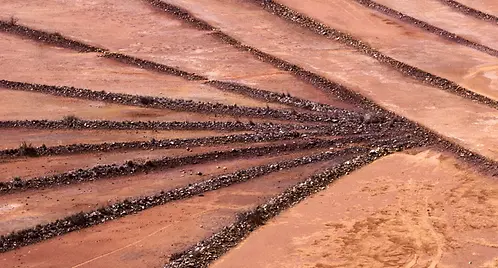
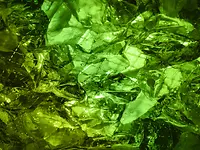
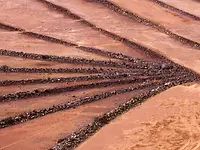
Wet tailings storage in Mongolia – the dry stacking approach frees up this degraded land.

Overthinking Tailings

Why tailings treatment is becoming a defining issue for modern and sustainable mining.

Environmental performance, safety, and long-term responsibility are increasingly shaping how mining projects are approved, financed, and accepted by society. One topic illustrates this shift particularly clearly: tailings treatment. Once regarded as a largely technical discipline, tailings management has moved into the public spotlight following dam failures, rising water scarcity, and growing regulatory. 

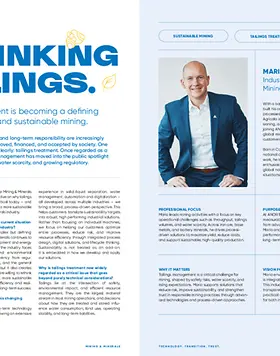
Mario Gerards, Industry Director Mining & Minerals at ANDRITZ Separation, shares his perspective on why tailings treatment has become so critical today – and how innovation can help drive a more sustainable future for the mining and minerals industry. 

Mario Gerards, Industry Director Mining & Minerals, ANDRITZ

Mario Gerards, Industry Director Mining & Minerals, ANDRITZ

© Lars Behrendt

How would you describe the current situation of the mining and minerals industry?

The industry is facing a complex but defining moment. Demand for raw materials continues to grow, driven by global development and energy transition. At the same time, the industry faces growing expectations around environmental impact, safety, and transparency from regulators, investors, communities, and the general public. This creates pressure, but it also creates momentum. Companies that are willing to rethink processes and invest in safer, more sustainable operations while improving efficiency and resilience are better prepared for long-term success. 

What is ANDRITZ’s role in this changing industry landscape?

We see ourselves as a long-term technology partner for our customers. Drawing on extensive experience in solid-liquid separation, water management, automation and digitalization – all developed across multiple industries – we bring a broad, process-driven perspective.

This helps customers translate sustainability targets into robust, high performing industrial solutions. Rather than focusing on individual machines, we focus on helping our customers optimize entire processes, reduce risk, and improve resource efficiency through integrated process design, digital solutions, and lifecycle thinking. Sustainability is not treated as an add-on; it is embedded in how we develop and apply our solutions. 

Why is tailings treatment now widely regarded as a critical issue that goes beyond purely technical considerations?

Tailings lie at the intersection of safety, environmental impact, and efficient resource management. They are the largest material stream in most mining operations, and decisions about how they are treated and stored influence water consumption, land use, operating stability, and long-term liabilities.

Catastrophic failures of tailings dams have made these risks visible far beyond the mining community. At the same time, growing water scarcity and land use constraints mean that tailings management directly affects regions and communities around mining sites. The consequences for ecosystems and people are immediately understandable. As a result, expectations have changed.

Tailings management is more and more seen as a key lever for more sustainable mining operations, not only as an engineering task.

Stakeholders expect clear answers to fundamental questions: how resources are used efficiently, how water is managed, and how long-term stability is ensured. Addressing these questions requires transparent, explainable solutions that go well beyond minimum compliance.

Why is water management central to tailings treatment?

Water is becoming scarce in many mining regions, with growing competition for it. Tailings treatment determines how much process water can be recovered and reused instead of being lost to storage facilities. Improving process water recovery reduces environmental impact, lowers dependency on fresh water sources, and strengthens operational resilience. From both a sustainability and economic perspective, efficient process water recovery has become one of the most decisive performance drivers for modern mining operations. 

How does ANDRITZ approach innovation in tailings treatment – and why is operability so important?

At ANDRITZ, innovation is guided by the goal of making mining more sustainable and productive by combining resource effi ciency, stable operation, and digital process intelligence.

This means reducing environmental impact while at the same time improving process stability, efficiency, and transparency. In tailings treatment, the focus is on improved dewatering, higher process water recovery, and reduced risk across the full lifecycle of a mine. But technology only creates value if it works reliably in daily operation. Tailings treatment is a continuous, long-term process that must remain stable under changing conditions. Operability therefore plays a key role. Solutions must be robust, easy for operators to manage, and provide predictability that ensures consistent performance over time.

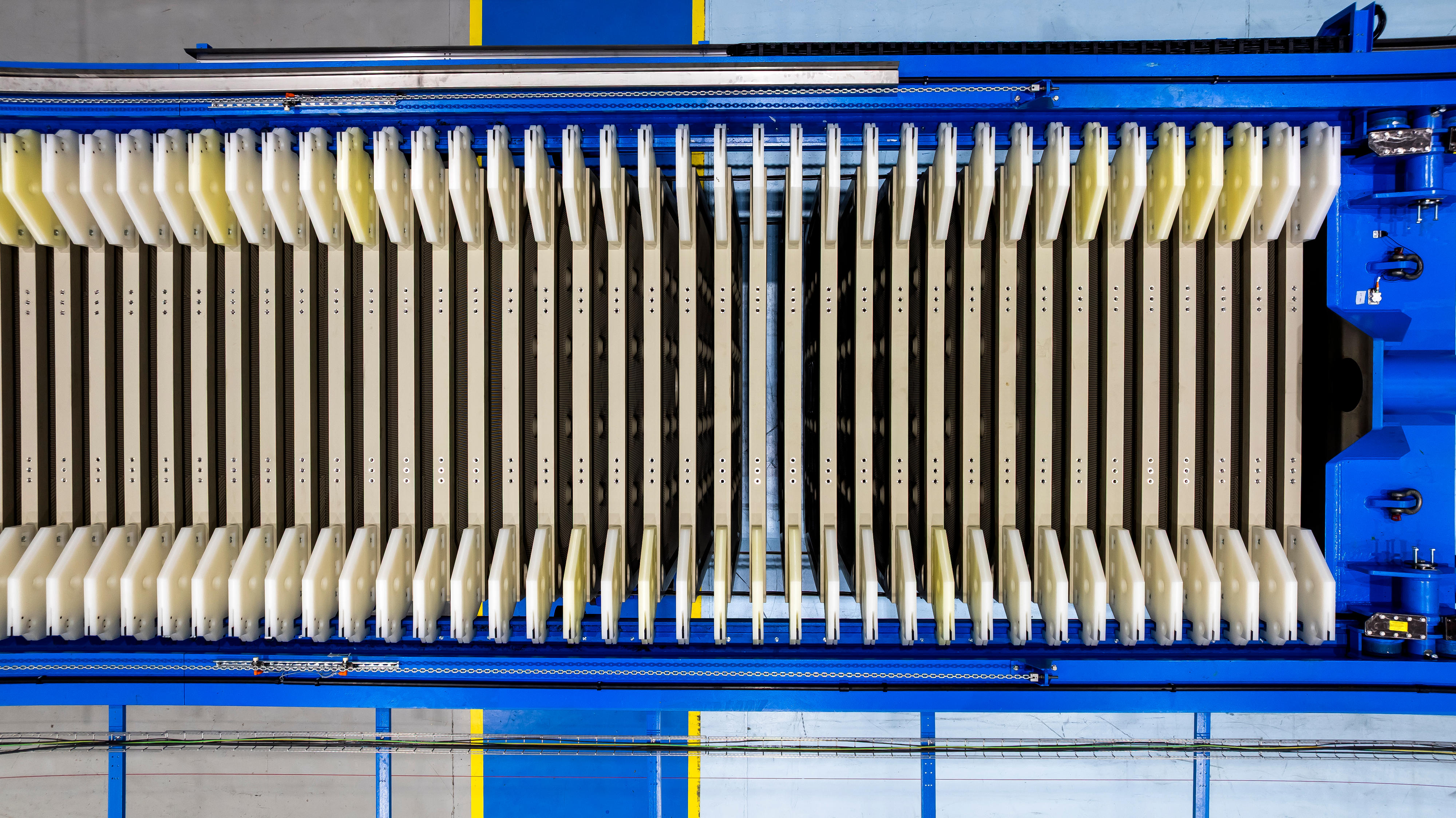
The MiningMaster filter press is one example of this approach. Developed specifically for tailings applications, it builds on proven filtration principles while addressing the key requirements of high capacity, robustness, and easier handling. Our focus is always on practical innovation that supports operational excellence, measurable performance improvement, safety, and sustainability in everyday operation. 

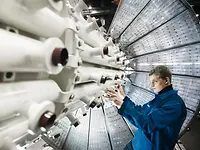
The ANDRITZ MiningMaster can accommodate up to 240 filter plates

The ANDRITZ MiningMaster can accommodate up to 240 filter plates 

© Chan/Weart

How does effective tailings treatment support the long-term viability of mining operations? 

Effective tailings treatment contributes to long-term operational stability and risk reduction. When mining companies can demonstrate that tailings-related risks are well understood and actively managed, projects become more robust from a regulatory, financial, and operational perspective.  

Tailings treatment plays a visible role in this context. Improvements such as higher dry solids content, greater process water recovery, and stable dry tailings storage concepts can be measured and evaluated over time. Technology partners like ANDRITZ contribute by grounding recommendations in test work, data, and long-term operational experience.

How is tailings treatment expected to shape the future of mining?

Looking ahead, tailings treatment will play a defining role in how mining operations are assessed and understood – by regulators, investors, and society at large. The world needs mining, particularly for the materials required for decarbonization, electrification, and the energy transition. At the same time, expectations around safety, water stewardship, and long-term sustainability are becoming more stringent. Tailings treatment is therefore emerging as a key benchmark for responsible and sustainable mining practices. Future developments will place stronger emphasis on water efficiency, safer and more stable tailings storage concepts, digital solutions for process optimization, and long-term risk reduction across the full lifecycle of a mine.

For ANDRITZ, this means working closely with our customers to shape this transition together. By combining process expertise, digital solutions, and engineering experience, we support mining operations in meeting rising requirements step by step. The focus is on robust, reliable solutions that improve efficiency and safety today while preparing operations for the sustainability challenges of tomorrow. 

Meet Mario Gerards 
Industry Director Mining & Minerals, Separation

With a background in mineral process engineering, Mario has built his career around the optimization of mineral production processes. After graduating in mineral processing from TH Georg Agricola in Bochum, he worked in process engineering, commissioning, and international sales roles across the industry before joining ANDRITZ Separation in 2020. Since 2021, he has led the global mining and minerals industry activities, working closely with customers and teams worldwide from ANDRITZ’s Cologne office.

Born in Cologne and raised nearby in Hürth, Mario values international collaboration and pragmatic problem‑solving. Outside work, he is a passionate 1. FC Köln football fan, an active sports enthusiast, and enjoys traveling with his family. He is driven by the global nature of his role, a positive mindset – even in challenging situations – and a structured yet flexible approach to his work.


PROFESSIONAL FOCUS

Mario leads mining activities with a focus on key operational challenges such as throughput, tailings volumes, and water scarcity. Across iron ore, base metals, and battery minerals, he drives process‑driven solutions to maximize yield, reduce costs, and support sustainable, high‑quality production.


PURPOSE IN ACTION

At ANDRITZ, purpose comes to life through solutions that deliver measurable impact in daily operations. In tailings treatment, from advanced dewatering to increased process water recovery, Mario and his team help mining operators improve environmental performance, strengthen operational stability, and prepare for long-term responsibility beyond the life of each mine.


WHY IT MATTERS

Tailings management is a critical challenge for mining, shaped by safety risks, water scarcity, and rising expectations. Mario supports solutions that reduce risk, improve sustainability, and strengthen trust in responsible mining practices through advanced technologies and process-driven approaches.


VISION FOR THE FUTURE

Mario envisions a mining industry where tailings treatment is integrated into sustainable process design from the start. This includes safer storage, smarter water use, and greater transparency through digitalization; focusing on robust, practical solutions that support long-term sustainability for both industry and society.