“The decision to go with ANDRITZ solutions was not just trust and reputation based, we undertook significant technical and cost analyses, too.”
Khagen Bora
Project Manager, ABEPL

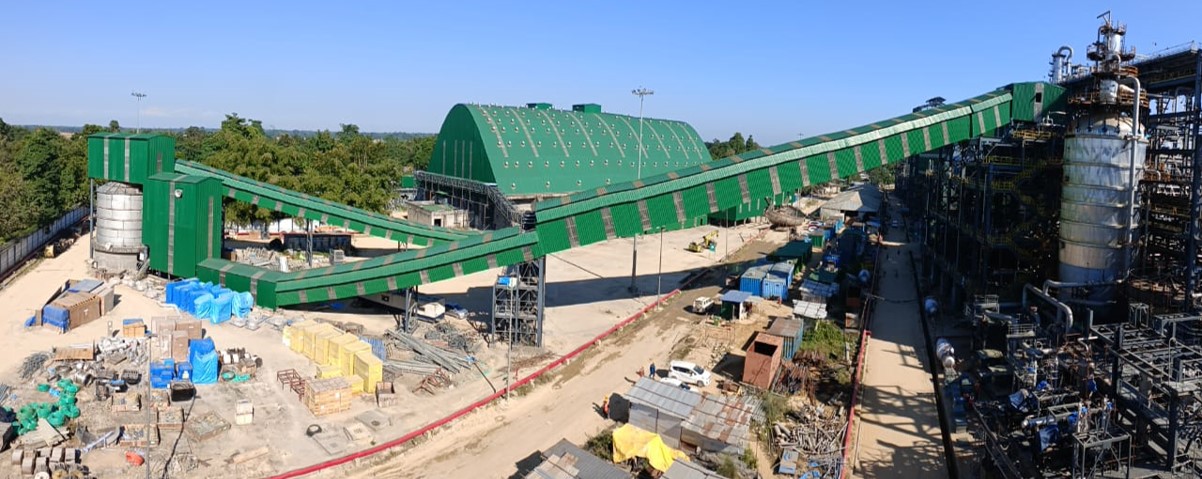
In September 2025, the Prime Minister of India, Narendra Modi, inaugurated the first refinery to turn bamboo into fuel-grade ethanol. The plant in Numaligarh, in the Golaghat district of Assam, is a joint venture between an Indian refinery company and two Finnish firms: an energy company and a wood pulping specialist. ANDRITZ Feed & Biofuel was responsible for the first-of-its-kind, custom-built raw bamboo treatment facility that keeps the refinery fed.
By producing fuel grade ethanol at home, India is decreasing its dependence on imported crude oil. If it's at least 99.5% pure, ethanol can be blended into petrol, and the Government of India has set an escalating sequence of targets for the ethanol content of fuel: starting at 5% in 2018; then 10%; and now 20% since 2025.
Processes for producing fuel-grade ethanol from biomass are well established, but the Assam refinery is the first to use bamboo as feedstock. The previous generation of bio-ethanol refineries have all used food crops like maize and sugar cane, leading to uneasy choices and trade-offs. Fuel security or food security? A difficult call to make.
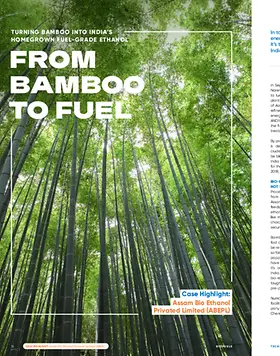
Bamboo isn't grown as food. Plus, it grows back fast after being harvested, without needing to be re-sown. Some species of bamboo can grow so fast you can hear it happening; it sounds like popping candy. The fastest growing varieties have been recorded growing 91cm in 24 hours. It's abundant throughout the north-east of India. The only reason it hasn't been used as bio-ethanol feedstock before now is that it's tougher than food crops. That calls for special pre-processing before it's refinery ready.
Numaligarh Refinery Limited already had the facilities to blend ethanol into petrol. The company joined hands with Finland's Fortum and Chempolis to form Assam Bio Ethanol Privated Limited (ABEPL). Based on the partners' combined expertise, the joint venture decided the investment in a dedicated bamboo biomass treatment facility was worth it to help meet the government's fuel-blending target.
Khagen Bora
Project Manager, ABEPL
After being harvested, the bamboo is shredded into chips for transport to the refinery.
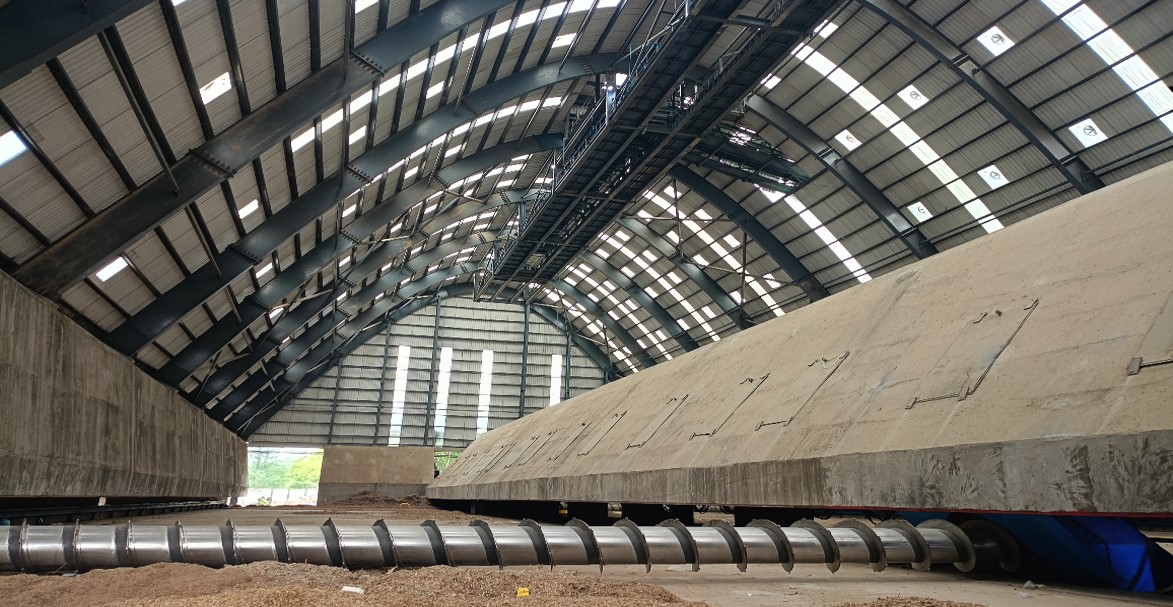
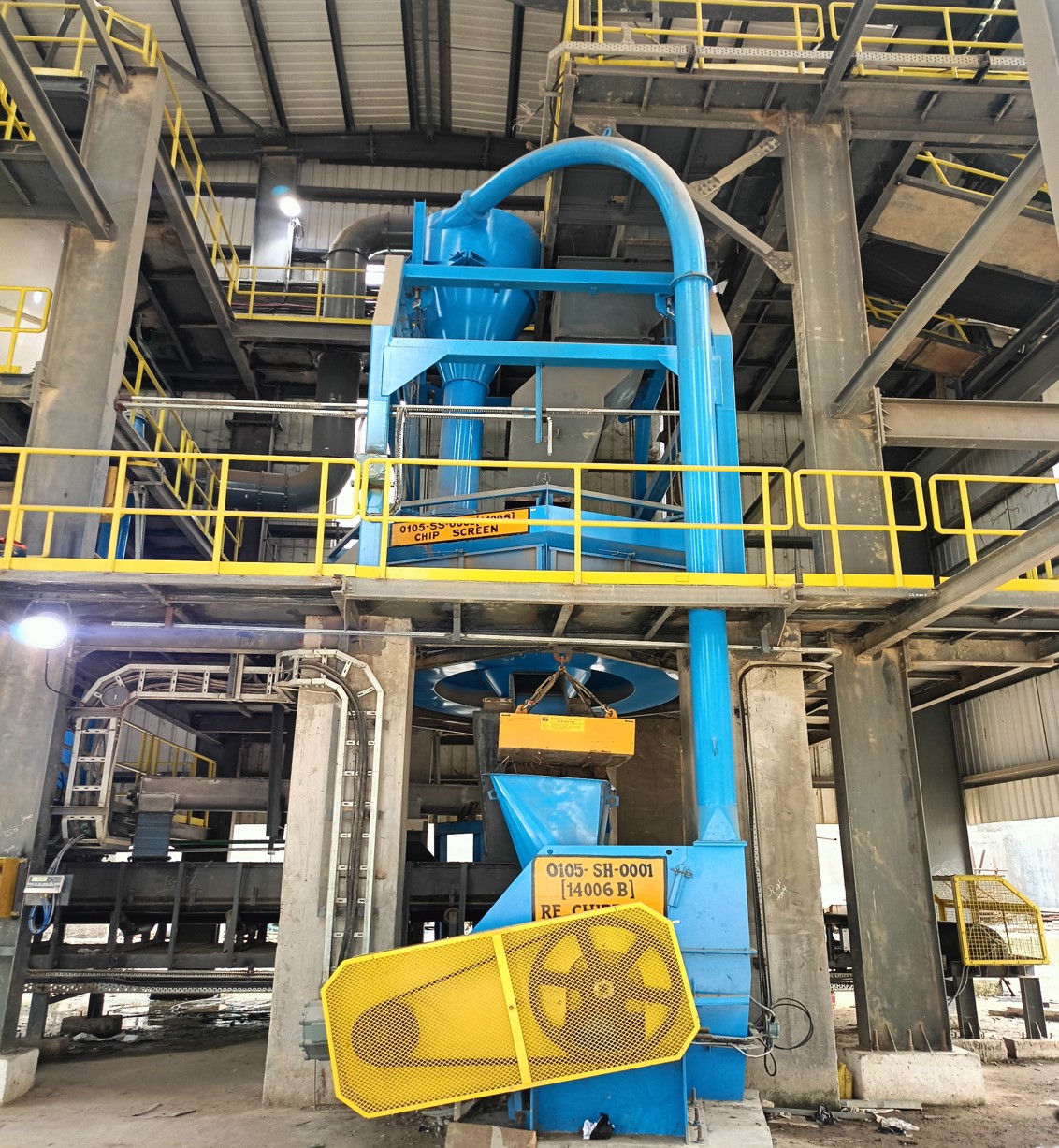
At the dedicated treatment facility, the chips are cleaned, dried, then chipped again into even smaller pieces. These are stored in silos to keep the facility's four digesters constantly fed. Screw conveyors feed chips from the silos to the digesters. Along the way, screens filter out any chips bigger than 25 millimeters and divert them back through the chipper.
In the digesters, the bamboo chips are soaked in a mixture of formic and acetic acid, heated to 165°C, and put under 6-7 kilos of pressure per square centimeter, turning them into a low-pH cellulose pulp. The cellulose pulp is washed, then converted into glucose by hydrolysis. The glucose is fed to a fermenter, which generates dilute ethanol. Finally, the ethanol is purified and delivered to the refinery to be blended with petrol. In a trial run, the treatment facility produced 99.7% pure ethanol.
ABEPL Project Manager Khagen Bora says, "I am from the pulp and paper industry, so I already knew ANDRITZ as a leading supplier for these types of processes.The decision to go with its solutions was not just trust and reputation based; we undertook significant technical and cost analyses and looked at the long-term outlook in terms of total cost of ownership and overall equipment effectiveness, and we are confident in our choice.
“Although being a new facility, with new technologies and machines, the plant’s proximity to an existing refinery has helped in the deployment of a local skilled workforce."
ANDRITZ delivered the bamboo treatment facility as a complete package: design, supply, installation, and commissioning. This included both physical design (structures like the chip silos) and system design (electrification, plant control, and automation).
"The raw material preparation undertaken by the ANDRITZ plant is the precursor to a highly sustainable closed-loop process, which makes the best possible use of all byproducts," says Bora.
The liquid byproduct from washing the cellulose pulp is evaporated, recovering water and commercially viable chemicals. The solid lignin residue left over from the same stage is dried and burned to fuel the boilers, generating 25.6 megawatts (MW) of power and process steam. Because this is more than the process needs the facility has a secondary role as a green power plant, feeding power back to the grid.
There's even potential in the 18 MetricTonnes (MT) of ash left over after each day of running the boilers. It contains potassium that could make it usable as cement, bricks, or fertilizer.
Arun Chidambaram
Project Manager, ANDRITZ Feed & Biofuel
At full capacity, the Assam plant is capable of producing 48,900MT of fuel grade ethanol a year.
To fulfill its potential, the plant will need 500,000 tonnes of raw bamboo a year. The joint venture partners calculate that this translates to 12,500 hectares of plantation nursing 6 million saplings over the next three years – and their goal is to source all this bamboo within 300 kilometers of the plant.
As of February 2026, six months after inauguration, ABEPL had registered 4,200 farmers in the sourcing zone, representing 300 hectares of bamboo plantation. The venture pays farmers directly, without involving go-betweens. It expects to have more than 300,000 farmers registered within the next three years.
ABEPL does not ask farmers to replace their existing crops with bamboo. Instead, the partners are identifying barren and unused land where bamboo could take root, and giving out saplings to get interested farmers started.
"We have freely distributed 100,000 saplings, the majority of which are for institutional players like tea gardens," says Rupjyoti Hazarika, Chief Executive Officer of ABEPL.
The Government of India allows tea garden owners to use 5% of their land for crops other than tea, and many have proved willing to use that allowance to cultivate bamboo.
ABEPL set out to support India's petrol blending policy, and achieved so much more.
As well as bio-ethanol, the Assam plant is capable of producing 19,000 tonnes of furfural, 11,000 tonnes of acetic acid, and 32,000 tonnes of liquid carbon dioxide every year. It acts as a 25MW, zero waste green power plant. And it has already supported local farmers and entrepreneurs to the tune of 2.4 crore rupees – nearly USD 250,000.
"This project sets a new benchmark in sustainable engineering, underscoring our commitment to innovation, sustainability, and driving India’s clean-energy journey forward,” said Arun Chidambaram, Project Manager, ANDRITZ Feed & Biofuel.
The scope of supply delivered by ANDRITZ to the ABEPL project includes:
New plant in India ramps up to help hit ambitious government sustainability targets.
ANDRITZ Feed and Biofuel Technologies manufactures a range of equipment for ethanol production through corn wet milling.


The 1st Shift – Technology. Transition. Trust. We are delighted to introduce you to The Shift, the new magazine from our Environment & Energy business area.

New plant in India ramps up to help hit ambitious government sustainability targets.

ANDRITZ Feed and Biofuel Technologies manufactures a range of equipment for ethanol production through corn wet milling.


The 1st Shift – Technology. Transition. Trust. We are delighted to introduce you to The Shift, the new magazine from our Environment & Energy business area.

Our extensive product portfolio covers a spectrum of technologies ranging from mechanical and thermal solid/liquid separation, grinding, pelletizing, pumping fluids, emission reduction technologies, carbon capture, to green hydrogen and renewable fuel production.
ANDRITZ Separation is the world’s leading separation specialist, with the deepest knowledge, broadest technical resources, and most comprehensive service solutions.
ANDRITZ offers an extensive line of equipment and complete plant solutions for the production of high-quality feed and biomass products.
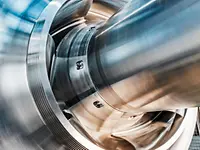
Our engineered pumps are operating in various industrial applications successfully all over the world. They offer robustness and wear resistance and fulfill highest customer expectations in terms of efficiency, life cycle, maintenance friendliness and economic efficiency.
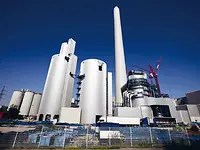
We provide you with tailor-made air pollution control solutions focusing on reduced emissions and improved performance and efficiency to meet changing market conditions and comply with asset strategies. Our offering covers the entire flue gas line, ranging from particulate control, dry and wet scrubbers, to multi-pollutant equipment for industrial, waste-to-energy and power generation plants.

ANDRITZ provides holistic and integrated P2X solutions for producing green hydrogen, e-methanol and e-ammonia.
Welcome to our Tradeshows & Events page! Here you'll find a selection of our key tradeshow participations of this year.